
Your Vehicle. Your Business. One Platform.
Sign in securely to manage bookings, vehicles, and services in one place.
Log in
Fast access to your dashboard
Use this if you book services and manage your account.
Both options use the same email and password. Business highlights seller tools after you sign in.
Don't have an account? Register now
Join CarServicesLTD
Create a user or business account in one place.
A Comprehensive Summer Car Care Checklist for Reliable Performance
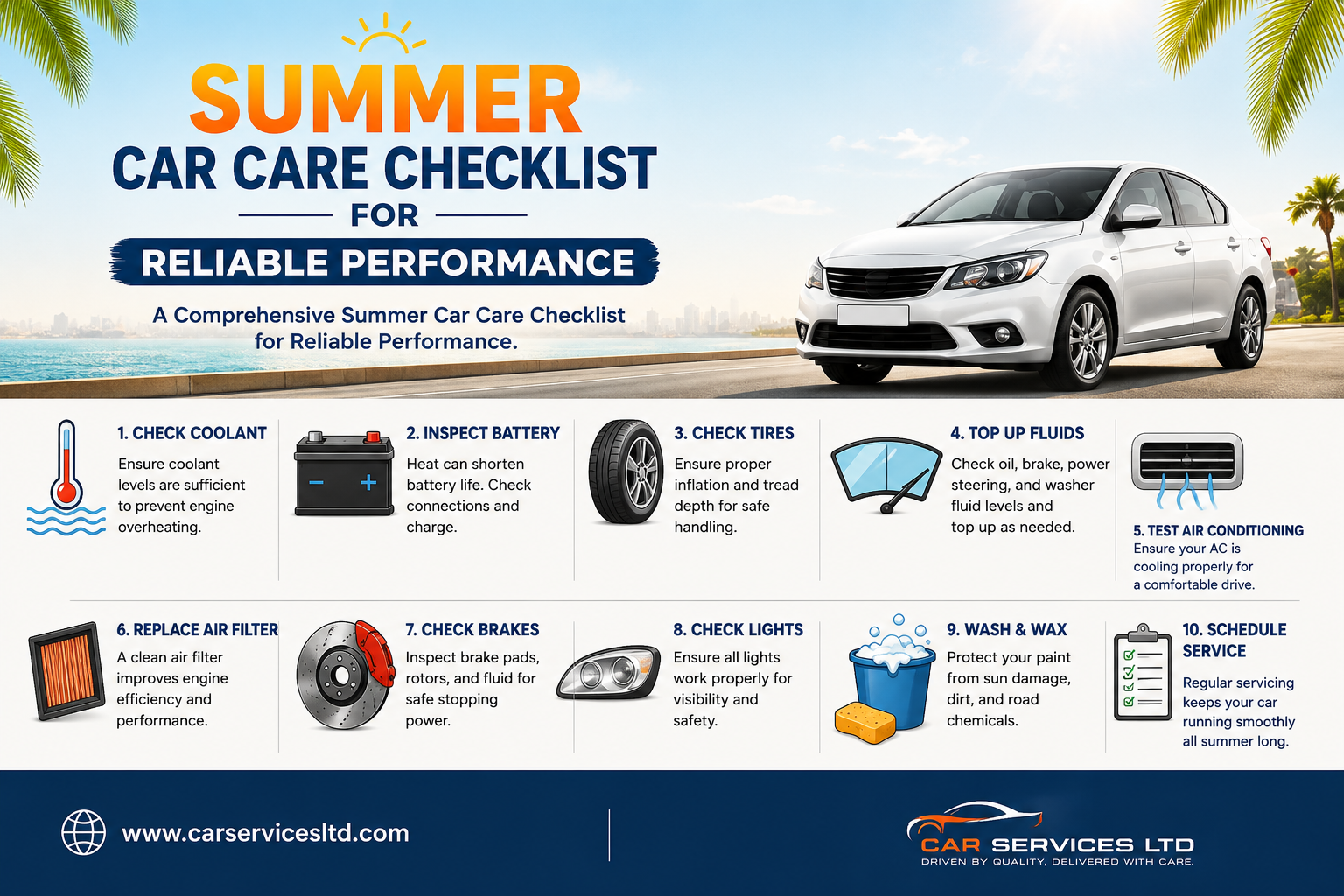
Summer can be one of the most challenging seasons for your vehicle. With temperatures often exceeding 45°C, prolonged exposure to sunlight, heavy traffic conditions, and intense UV radiation, your car...
Summer can be one of the most challenging seasons for your vehicle. With temperatures often exceeding 45°C, prolonged exposure to sunlight, heavy traffic conditions, and intense UV radiation, your car experiences significant stress every day. Without proper maintenance, these conditions can affect performance, reduce fuel efficiency, and increase the risk of unexpected breakdowns.
A well-planned summer car care routine helps keep your vehicle running smoothly, improves driving comfort, and prevents costly repairs. Here is a comprehensive summer car care checklist to ensure your car remains cool, safe, and road-ready throughout the hottest months of the year.
Why Is Summer Car Care So Important?
Many drivers focus on preparing their vehicles for winter, but summer conditions can be equally damaging. Extreme heat affects several critical vehicle components and systems.
How Summer Affects Your Car
- Extreme heat places additional strain on the engine, battery, and cooling system.
- Intense UV radiation can fade paint and damage interior surfaces.
- Hot road surfaces soften tyres and accelerate tread wear.
- High temperatures cause essential fluids to evaporate faster.
- Air conditioning systems work harder, increasing wear and tear.
- Battery fluid evaporates more quickly, reducing battery life.
- Overheating risks increase significantly during traffic congestion.
- Cabin temperatures can exceed 65–70°C in parked vehicles.
Regular inspections and preventive maintenance can help minimize these risks and ensure reliable performance throughout summer.
1. Inspect the Cooling System
Your vehicle's cooling system is the first line of defense against overheating.
Check coolant levels regularly and ensure the coolant mixture is suitable for high temperatures. Inspect hoses, clamps, and the radiator for leaks, cracks, or damage. If the coolant appears dirty or contaminated, consider a coolant flush.
A properly functioning cooling system helps maintain optimal engine temperature and prevents overheating during long drives or traffic jams.
2. Test the Air Conditioning System
Few things are more important during summer than a properly working air conditioner.
If your AC takes longer than usual to cool the cabin, produces weak airflow, or emits unpleasant odors, it may require servicing. Have the refrigerant levels checked and inspect filters and vents for blockages.
A well-maintained AC system improves comfort and reduces driver fatigue during hot weather.
3. Check Battery Health
Many drivers assume batteries fail mainly during winter, but extreme heat can be even more damaging.
High temperatures accelerate battery fluid evaporation and increase internal corrosion. Inspect battery terminals for corrosion and ensure all connections are secure.
If your battery is more than three years old, consider having it professionally tested to avoid unexpected failures.
4. Examine Tyres Carefully
Hot roads can significantly affect tyre performance and safety.
Check tyre pressure regularly, as heat causes air expansion and pressure fluctuations. Underinflated or overinflated tyres can reduce fuel efficiency and increase the risk of blowouts.
Inspect tyres for:
- Uneven tread wear
- Cracks or sidewall damage
- Embedded objects
- Adequate tread depth
Don't forget to inspect the spare tyre as well.
5. Monitor Engine Oil and Fluids
Summer temperatures place additional stress on engine components.
Check engine oil levels frequently and ensure oil changes are completed according to manufacturer recommendations. Clean oil provides better lubrication and heat protection.
Also inspect:
- Brake fluid
- Power steering fluid
- Transmission fluid
- Windshield washer fluid
- Coolant
Maintaining proper fluid levels helps your vehicle operate efficiently and safely.
6. Protect Your Car's Exterior
Strong sunlight and UV exposure can damage your vehicle's paintwork over time.
Wash your car regularly to remove dust, dirt, bird droppings, and contaminants that can damage the paint surface. Applying a quality wax or paint sealant creates a protective barrier against UV rays.
Whenever possible, park in shaded areas or use a car cover to reduce direct sun exposure.
7. Safeguard the Interior
Summer heat can be particularly harsh on your car's interior.
Dashboard surfaces, leather seats, steering wheels, and plastic trim can crack, fade, or warp due to prolonged exposure to sunlight.
To protect the interior:
- Use windshield sunshades
- Apply UV protectants to dashboard surfaces
- Park in covered or shaded areas
- Crack windows slightly when safe to reduce heat buildup
These simple steps can help preserve your vehicle's appearance and resale value.
8. Inspect Brakes
Braking performance is critical year-round, especially during summer road trips.
Listen for unusual noises such as squealing or grinding and pay attention to any vibration during braking. Have brake pads, rotors, and brake fluid inspected regularly.
Reliable brakes improve safety and provide confidence in all driving conditions.
9. Replace Worn Wiper Blades
Summer storms can arrive unexpectedly, reducing visibility within seconds.
Inspect windshield wiper blades for cracks, tears, or streaking. Replace worn blades to ensure clear visibility during sudden rain showers.
Also verify that the windshield washer system is functioning correctly.
10. Prepare an Emergency Kit
Even a well-maintained vehicle can encounter unexpected issues.
Keep an emergency kit in your car containing:
- Drinking water
- Flashlight
- Jumper cables
- Basic tools
- First-aid supplies
- Mobile phone charger
- Emergency contact information
Having essential supplies available can make a significant difference during breakdowns or emergencies.
Schedule Regular Vehicle Servicing
Routine servicing remains one of the most effective ways to keep your vehicle performing at its best during summer.
Professional inspections can identify developing issues before they become major repairs. Regular maintenance improves reliability, enhances fuel efficiency, and extends the lifespan of critical components.
Final Thoughts
Summer heat can be demanding on every part of your vehicle, from the engine and battery to the tyres and air conditioning system. Following a comprehensive summer car care checklist helps prevent breakdowns, improves safety, and ensures a comfortable driving experience throughout the season.
By taking a proactive approach to maintenance, you can enjoy worry-free journeys while protecting your investment and avoiding costly repairs.
For professional summer vehicle inspections, servicing, and maintenance solutions, visit www.carservicesltd.com and keep your car performing at its best all season long.